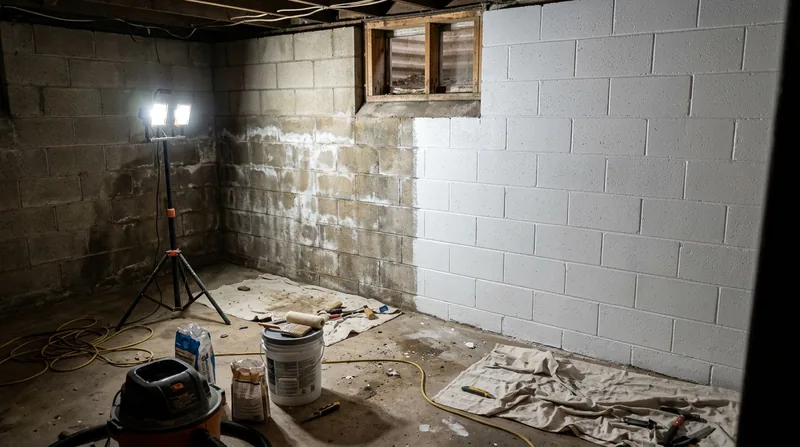




Brighton sits on heavy glacial clay that swells with every spring snowmelt and shrinks hard in July, and that soil movement works directly on your basement walls. In the 1900s to 1940s blocks near the railroad, partial stone and block cellars sweat and flake white salt all summer. East-side ranches from the 1950s to 1970s have block walls that wick groundwater after a hailstorm dumps an inch in twenty minutes. Newer subdivisions on the north and east edges have poured walls, often unfinished, with walkouts where the lot slopes toward the drainage ditch. Basement Wall Sealing in Brighton starts with one honest question: is your wall damp, or is it under pressure? We answer that before we sell you a sealer. If you already know water is coming in, start with our basement waterproofing page and we will sort the rest on site.
Why Brighton Basements Get Damp Walls and Efflorescence
Brighton gets about 5,000 feet of open plains light and a wide dry sky, which pulls moisture out of the soil fast in summer and leaves the clay cracked and open. Then the spring snowmelt off the foothills and the June through August thunderstorms push water back against the foundation. Water finds the cracks the dry cycle opened, moves through block cores, and shows up as efflorescence and a musty smell downstairs. The failure mode that dominates here is not a single leaking crack, it is seasonal hydrostatic pressure against a wall that was never sealed on the outside.
- Block walls on east-side ranches wick water through the mortar joints and show white salt bloom at the base.
- Poured walls in the newer north and east subdivisions crack at the cold joints and form vertical hairline cracks from freeze-thaw cycles.
- Stone and block cellars downtown near the railroad have porous mortar that sheds grit when the wall stays damp.
- Lots that slope toward the drainage ditches send surface water straight to the wall footing instead of away from it.
Sealing helps most when the wall is damp but not actively weeping, and we tell you plainly when that is not your situation.
Key info: A 1960s ranch off East Bridge Street had efflorescence halfway up a block wall every spring. The sealer alone would have failed there, because the water was coming through the footing drain, not the wall face. We ran an interior perimeter drain first, then sealed the dry wall.
For the code and permit side of foundation and drainage work, the City of Brighton Building Division is the authority to check with before any structural repair: City of Brighton official site.
How We Seal a Brighton Basement Wall, Step by Step
We do not roll sealer onto a wet wall and call it done. The prep is most of the job, and the prep is where most failed DIY sealing jobs in Brighton went wrong. We read the wall first: where the moisture is, how high it climbs, whether it is wicking or pressurized. Then we work in this order.
- We walk the basement and the exterior grade, and we check the downspout extensions and the slope toward the ditch.
- We wire-brush and scrape the wall to remove efflorescence, loose parging, and old failing paint.
- We patch honeycombs, mortar joints, and spalled spots with a hydraulic cement or a structural patch that cures against damp masonry.
- We treat active cracks separately, with epoxy injection for structural cracks or polyurethane injection for leaking ones, before any sealer goes on.
- We apply a penetrating sealer on block and porous masonry, or a membrane sealer on poured walls where the surface is sound.
- We note any spot where the sealer will not hold and recommend the right fix, usually drainage, instead of sealing over it.
If the wall is bowing or the crack is wider than a hairline, sealing is the wrong tool and we say so. That is a foundation crack repair conversation, and sometimes a structural one.
Key info: In a 2010s walkout in the north Brighton subdivisions, the rear wall stayed damp only after snowmelt. The sealer held, but we also extended two downspouts and regraded a swale that dumped water against the walkout wall. Sealing a wall without fixing the grade is money spent twice.
Sealing Methods We Use on Brighton Walls
Not every wall takes the same product. Block, poured concrete, and old stone each behave differently under the clay soil and freeze-thaw cycles here, so we match the method to the wall. The table below is what we actually put on Brighton walls and when each one is the right call.
| Approach | Description | Best for |
|---|---|---|
| Penetrating sealer | Sinks into the masonry and blocks capillary wicking without trapping moisture. | Damp block walls on east-side ranches with efflorescence. |
| Membrane sealer | Builds a flexible film on the surface that bridges hairline cracks. | Sound poured walls in newer north Brighton subdivisions. |
| Epoxy injection | Ports are set along the crack and epoxy is pumped in to restore the wall. | Structural vertical cracks in poured walls before sealing. |
| Polyurethane injection | Foam expands into wet cracks and shuts off active seepage. | Leaking cracks that are wet when we arrive. |
| Parging repair plus sealer | Failing parging is knocked off and rebuilt before sealing. | Old stone and block cellars downtown near the railroad. |
When the wall is damp because the footing drain is dead, no sealer on the face will fix it, and that is a interior drain tile system job instead.
Basement Wall Sealing Cost in Brighton: What to Expect
Most basement wall sealing jobs in Brighton start around $1,500, and that figure covers a typical basement wall run with prep, efflorescence removal, patching, and one sealer type. A small partial cellar downtown can land under that. A full basement with heavy efflorescence, failing parging, and several cracks to inject first will run higher. We do not quote a number until we have seen the wall and the grade outside it.
- Wall length and height drive the material and labor, since a full basement has far more surface than a partial cellar.
- Prep condition matters most: heavy efflorescence, old paint, and failing parging add hours before any sealer goes on.
- Crack injection is priced separately from sealing, and wet active cracks cost more than dry structural ones.
- Access to the wall (finished rooms, shelving, low headroom) can add time to a job that looks simple.
Get two or three estimates and ask each one what they plan to do about the water source, not just the wall face. Our full pricing overview lays out the line items so you can compare apples to apples.
Hiring Basement Wall Sealing Near Me in Brighton: What to Check
Anyone can buy a pail of sealer and a brush. What separates a real waterproofing contractor near Brighton is whether they diagnose the wall before they sell the product, and whether they are set up to handle what they find. Use these checks before you sign anything.
- Confirm the contractor is licensed and insured, and ask for the certificate, not just a verbal yes.
- Get at least two or three written estimates that specify prep work and the sealer type, not just a lump price.
- Ask for local references on block and poured walls like yours, and call one.
- Ask who pulls any permit, since structural foundation repair and drainage changes often require one, and rules vary by jurisdiction.
- Check HOA requirements in the newer subdivisions before any exterior grade or drainage change is made.
If a contractor wants to seal a wall that is actively weeping without addressing the water source, walk away. Reach us through the contact page and we will tell you straight what your wall needs.
Basement Wall Sealing in Brighton: Pricing Guide
| Service | Price | Details |
|---|---|---|
| Partial cellar wall sealing | Starting at $1,500 | Prep, efflorescence removal, patching, and penetrating sealer on a short stone or block wall run |
| Full basement wall sealing | Starting at $2,400 | Full perimeter prep and sealer application, price moves with wall length and surface condition |
| Sealing with crack injection | On estimate | Epoxy or polyurethane injection on active cracks is priced per crack before sealing begins |
| Travel | Included | in Brighton and surrounding areas, no separate call-out or mileage fee |
| Estimate | Free | Response within 24h at (970) 714-2588, no obligation to book |
Indicative pricing, the exact cost depends on square footage, finish, and site access. Free personalized estimate within 24h at (970) 714-2588.


